Your restaurant is only as connected as your kitchen.
In today’s fast-paced restaurant industry, preparing excellent food is only part of delivering an exceptional dining experience. Behind every successful service is something equally important: clear, reliable communication between the front of house and the kitchen.
From the moment a server enters an order to the moment a chef completes a dish, every second and every detail matters.
Modern restaurant point-of-sale (POS) technology and kitchen display systems (KDS) help connect these critical operations, creating a more organized, responsive, and efficient restaurant.
Why Restaurant Kitchen Communication Matters
Imagine a busy Friday evening. The dining room is full, servers are moving between tables, and the kitchen is managing dozens of orders simultaneously.
A customer requests a steak cooked medium-rare, another has a food allergy, and a third needs a last-minute menu modification.
When communication depends on handwritten tickets, verbal instructions, or disconnected systems, mistakes become more likely.
An integrated restaurant POS and kitchen communication system helps ensure that important order information reaches the right people at the right time.
This can help restaurants:
- Reduce misunderstandings between servers and kitchen staff.
- Communicate menu modifications and special requests.
- Organize incoming orders more effectively.
- Improve coordination during peak dining hours.
- Reduce unnecessary delays and order remakes.
- Deliver a more consistent guest experience.
The objective is simple: keep everyone informed, from the dining room to the chef’s station.
How a Kitchen Display System Works
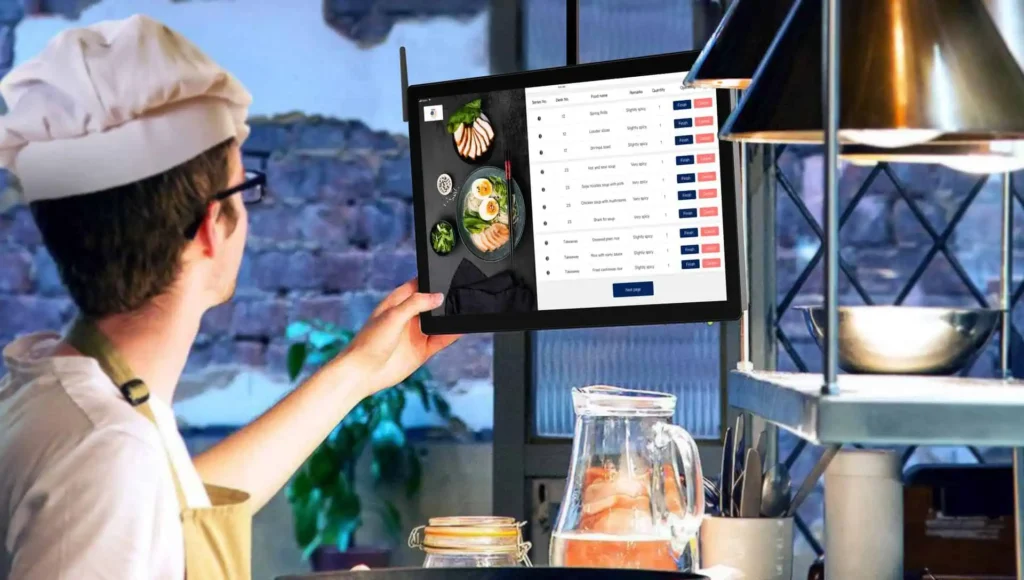
A kitchen display system (KDS) is a digital solution that presents restaurant orders electronically to kitchen staff, often replacing traditional printed kitchen tickets.
When connected to a compatible POS system, a KDS can receive orders as they are entered by servers or other supported ordering channels.
Instead of deciphering handwritten instructions or searching through paper tickets, chefs can view organized order information on a digital screen.
Depending on the system’s capabilities, kitchen staff may be able to view:
- New and pending orders.
- Table numbers and menu items.
- Cooking instructions and special requests.
- Order preparation status.
- Order timing and priority.
- Completed orders ready for service.
The result is a clearer workflow that helps the kitchen stay organized, particularly during high-volume service periods.
Connecting the Front of House With the Heart of the Restaurant
Restaurant efficiency depends on teamwork.
Servers need to know when meals are ready. Chefs need accurate information about what guests ordered. Managers need visibility into how service is progressing.
A connected restaurant POS environment helps bridge these operational gaps.
When order information moves digitally between the front of house and kitchen, restaurants can reduce their dependence on repeated verbal communication and manual ticket handling.
For example, when a guest requests a modification to an existing order, an appropriately configured integrated system can help communicate that change to kitchen staff.
This is especially valuable for restaurants handling large menus, multiple preparation stations, special dietary requests, and high customer volumes.
Better communication supports better coordination, and better coordination creates opportunities for faster, more consistent service.
Can Better Kitchen Communication Improve Restaurant Profitability?
Yes. Improving restaurant kitchen communication can contribute to profitability by reducing avoidable inefficiencies, although results depend on restaurant operations, staffing, and system implementation.
Consider the potential impact of fewer incorrect orders, less food waste, improved preparation coordination, and smoother table service.
When kitchen operations run efficiently, restaurant teams can spend less time correcting mistakes and more time serving guests.
For restaurant owners and operators, the value of connected technology extends beyond convenience. It supports the operational consistency needed to manage costs and deliver quality service.
Choosing the Right Restaurant POS and Kitchen Technology
Not every restaurant operates the same way.
A neighborhood café, full-service restaurant, busy sports bar, and multi-location hospitality business may have very different requirements.
When evaluating restaurant POS and kitchen display technology, consider these important questions:
- Order accuracy: Can the system clearly communicate menu modifications and special instructions?
- Kitchen workflow: Can staff easily identify new, pending, and completed orders?
- Ease of use: Is the interface practical for chefs and servers working under pressure?
- Integration: Can the technology work with the restaurant’s existing systems?
- Scalability: Can the solution accommodate changing operational requirements?
- Support: What installation, training, and ongoing assistance are available?
The best restaurant technology is not necessarily the most complicated. It is the technology that fits naturally into the restaurant’s daily operations.
Explore Restaurant Technology With CardSystems
At CardSystems, restaurant owners and operators can explore technology solutions and discuss their business requirements.
Whether you are opening a new restaurant, evaluating your current POS environment, or investigating better communication between servers and kitchen staff, understanding your operational needs is an important first step.
The EdgeServ POS kitchen connectivity concept highlights a fundamental principle of successful restaurant operations: accurate information, delivered at the right time, helps the entire team work together.
Visit CardSystems.com to learn more and inquire about restaurant technology solutions, available integrations, and options appropriate for your business.
Frequently Asked Questions
What is a restaurant kitchen display system?
A kitchen display system, commonly called a KDS, is a digital system that displays incoming food orders and preparation information for kitchen employees. It can help restaurants organize orders and reduce reliance on paper tickets.
How does a POS system communicate with the kitchen?
A compatible restaurant POS system can transmit order information electronically to a kitchen printer or digital display. Kitchen staff receive the information needed to prepare orders, including menu selections and supported modifications.
Can a kitchen display system reduce restaurant order mistakes?
A properly configured KDS can help reduce communication-related mistakes by presenting orders clearly and consistently. However, staff training, accurate order entry, and operational procedures remain essential.
Is kitchen display technology useful for small restaurants?
Yes. Small restaurants can benefit from digital order communication, especially during busy periods. The appropriate solution depends on order volume, menu complexity, available space, and budget.
A connected kitchen is the foundation of a coordinated restaurant.
Better order communication. Better kitchen organization. A better experience for your guests.
Explore your restaurant technology options at CardSystems.com.