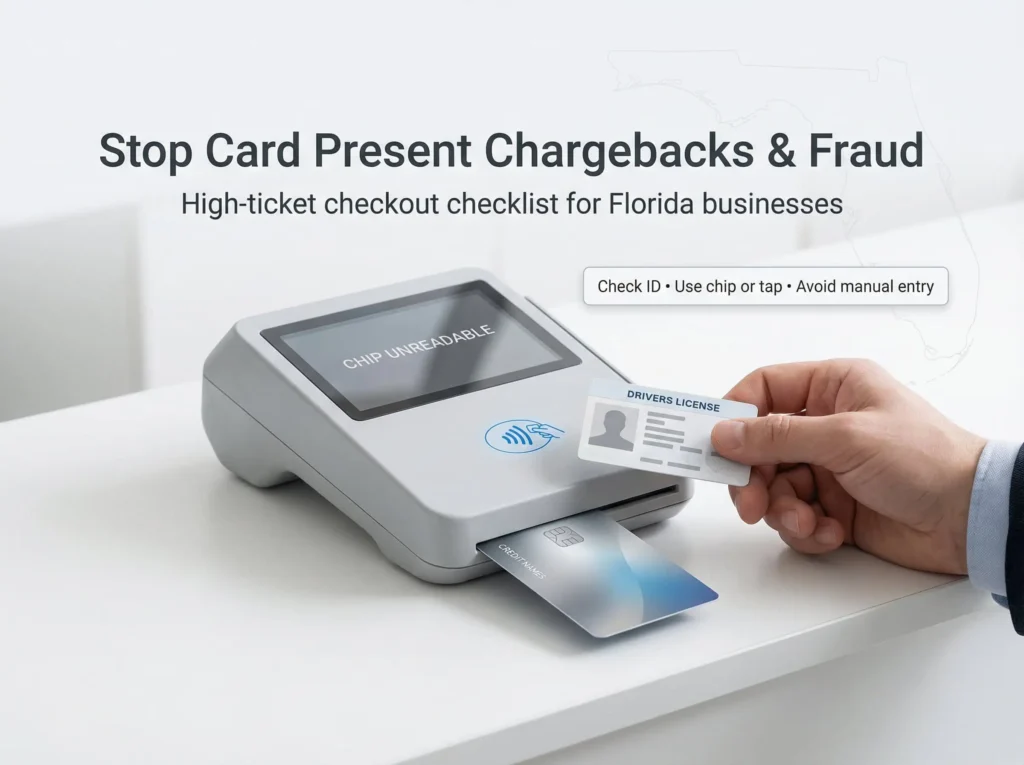
A $600 sale should never end up as a $2,100 loss.
A retail merchant recently had a customer make several individual transactions, that were manually entered because the chip was unreadable. The merchant did not check ID, and the customer later filed a chargeback. Not only did the merchant lose the sale; they were also charged a “lost case filing fee” for each transaction of $600 by the acquirer.
Another incident involved a restaurant where the customer ordered high-end wine and drink rounds for other diners. When it came to presenting the card, the chip was damaged. Instead of asking for another form of payment, the bartender just manually keyed in the transaction.
The issues were simple. When a card is swiped or keyed as opposed to chip-read or tap-to-pay, the merchant automatically loses most appeal attempts. They also didn’t provide enough proof that the real cardholder actually made the purchase, ID was not checked. In both cases, the true cardholder claimed that the charges were fraudulent.
You should always be mindful of fraud and chargebacks in today’s world. More so with medium to high ticket items. Set up an internal process to protect yourself.
What Makes Chargebacks Hard to Win
When a chargeback is filed, the bank looks for specific proof tied to how you accepted the payment.
When a card is used in-person, also called a card-present transaction, proof relies on things like a chip read, an approved authorization, and records of the buyer taking part in the sale. Visa provides merchant dispute guidelines which explains what evidence is required to help with the chargeback and when you may have no choice but to accept the dispute.
Fraudsters are aware of the rules and try to take advantage. Your goal as a merchant is to prevent fraud attempts at checkout and build evidence while the customer is still there.
The High-Ticket Rule That May Save You
Choose a dollar amount that you consider high-ticket for your business and let all of your staff know of that number. When a sale amount hits that number, your team can follow these same steps (or similar) every time.
High-Ticket Checkout Checklist
- Use chip or tap, not swipe. If the chip fails, view it as a red flag and ask for another form of payment.
- Check their ID and make sure it matches the name on the card. Notate that their ID was checked in the sale notes.
- Avoid manual entry for strangers on high tickets. If you really need to key it in, collect more evidence like name, phone, email, billing address, item details, and signature.
- Itemize the receipt. Don’t generalize what they purchased. List what they bought with serial numbers if applicable.
- Record proof of pickup or delivery. If the item is being shipped, keep records of tracking information.
The Red Flags Your Staff Should Know
Fraud isn’t usually detectable by a “bad” looking card. It usually is seen in people’s behavior. Some things to watch out for:
- They try to rush you through the steps
- They want to swipe or use manual entry even though the card has a chip and/or can tap
- They refuse to show ID or give any on their information
- They want to split the payment across multiple cards for no good reason
- They make multiple purchases in a short timeframe
- After the purchase, the customer asks to refund to a different card
If you come across someone acting this way, the best thing to do is slow down and make sure you follow the process correctly. Don’t get nervous and speed up or skip steps like they’re hoping you’ll do. Also, make it a no exception rule that all refunds go back to the original card. That rule can prevent a lot of refund-related fraud attempts.
There are also tools and procedures that can help you on the front end to mitigate these chargebacks before they happen. Use them and remember to always read the chip and check IDs on suspicious transactions, use AVS when prompted, and beware of multiple transactions.
Now with the new VAMP (Visa Acquiring Monitoring Program) rules taking effect, it’s a must to be proactive in keeping chargebacks to a minimum. Protect your account and your revenue.
Want Help Preventing Fraud and Chargebacks?
If you have any questions about past, present, or future fraud or chargebacks, call Card Systems at (239) 549-5055