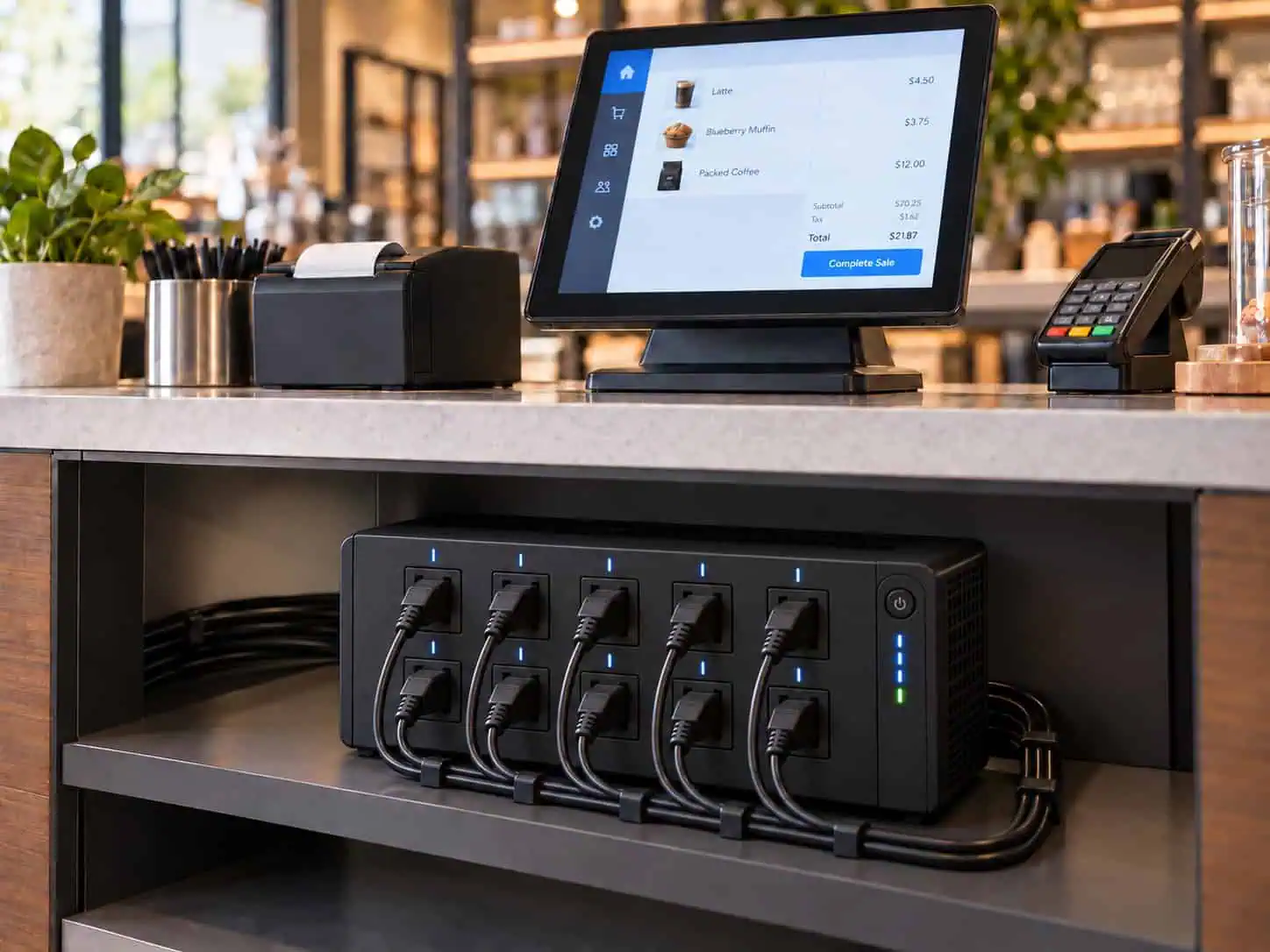
Payment security can be a hassle.
Scans needs to be completed, passwords have to be updated, and terminals require updates.
Those measures aren’t put in place to irritate you or slow you down. They exist to make sure your business, customers, and money are protected.
At Card Systems, we understand that you need to do business and take payments smoothly and reliably without having to spend all of your time and effort on payment security.
This is why we are focused on PCI compliance, payment equipment setup, network security, and access control.
Not to alarm you. But rather to prevent potential security breaches from causing damage to your business in the first place.
Payment Security Isn’t Always About Hacking
Most people think of a hacker trying to break into a system when talking about payment security. And sometimes that can be the case.
However, there are also many minor incidents that lead to payment security risks.
For example, when a staff member moves a terminal to another station. When your friend who is “good with computers” logs in to the router. When a vendor plugs in a device without checking first. Someone tries to reset equipment in the middle of rush hour. When you share login information to save time.
These actions may not necessarily be intentionally malicious, but they can create security threats.
The Federal Trade Commission advises small business to restrict access to sensitive assets, require multi-factor authentication, update security-related software, and avoid using default passwords to minimize your risks.
The question is simple:
Who should be able to access the systems and devices that handle your payments and customer data?
The answer is equally straightforward:
Only trusted and approved people.
What PCI Compliance Does For Your Business
PCI DSS is a set of security rules for businesses that secure and improve the storing, processing, or transferring of card data.
Among other things, PCI compliance helps to increase the level of security and decrease the chance of exposing card data. In addition, PCI helps you avoid failed scans, payment processing fines, and other issues associated with non-compliance.
Some of the key points of PCI DSS are:
Secure Networks
Your payment network should not be like public Wi-Fi. It requires proper configuration, strong passwords, firewall settings, and constant monitoring.
Protected Card Data
The cardholder information must be stored securely and must not be exposed to anyone, including employees, contractors, vendors, etc. This applies not only to the way this data is handled but also to its storage.
Strong Access Controls
Everyone working with the system should have appropriate permission levels. Cashiers can accept payments but cannot authorize returns; a manager can do that. This is not about trust but about lowering the risk level.
Regular Scans and Assessments
Running scans and reviewing PCI requirements helps find and fix vulnerabilities. Ignoring these processes may not seem dangerous until something serious happens.
Card Systems has covered some additional details in this post on avoiding payment processing fines and fees in Florida small businesses.
Why Network Security Is Important For Your Payments
Payment systems depend on a properly configured network.
It usually consists of your router, firewall, wireless network, terminals, POS stations, handhelds, backend computer, software, and other equipment.
A properly configured network will ensure that your payments are handled with minimal risks. But if something in it is not set up properly, it can lead to multiple issues.
- A weak password can give access to the wrong person.
- An outdated router can prevent necessary updates.
- A shared network can expose your payment traffic.
- Unapproved remote access tools can provide hidden entry points.
- A staff member can reset equipment or settings and disable security controls.
As Verizon’s Data Breach Investigations report shows repeatedly, many breaches occur due to weak passwords, software vulnerabilities, and human errors.
Which is why we always ask questions before making any changes. The correct answers will help secure your checkout station, your customers’ safety, and their money.
Restrict Access To Payment Equipment
Payment devices look pretty simple from the outside.
Terminals, cables, routers, boxes.
But in reality, they are parts of the payment system and require careful handling.
The thing is, if the wrong person get their hands on these devices, several things can happen.
Equipment Can Be Misconfigured
This can lead to transaction failures, slower payments, non-compliance or failed PCI scans, and other issues.
Security Controls Can Be Turned Off
Someone trying to “fix” something might turn off some security controls to make everything work faster without realizing the risk they’ve created.
Card Data Can Face More Risk
If equipment is connected to the wrong network and/or an insecure device, that can lead to the exposure of card data. This is exactly what PCI tries to protect against.
Payment Devices Can Be Tampered With
Terminals should remain where they can be seen at all times and no customers, vendors, or other unapproved people are able to access them.
You Can Lose Sales During Busy Hours
One wrong change can completely stop payment transactions which would cause long lines, customer frustration, and even more stress for your staff.
Think about your busiest times. What would happen if your terminals suddenly become unresponsive because someone tinkered with the wrong device?
Qualified Support Protects Everyone
Payment systems are not the place for guessing and improvising.
That is why, at Card Systems, we offer PCI QIR-certified support and services that will ensure proper configuration of your payment system and proper installation of devices and software.
Our experienced and qualified technicians can verify and adjust:
- Network settings
- Device setup
- Terminal updates
- Access levels
- Security controls
- Payment flow
Your employees, friends, or external IT vendor may be good at what they do. But in order to safely install payment equipment, a certain process should be followed to protect both your payment system and everyone who interacts with it.
With clear rules that get followed, nobody will be blamed for touching something they shouldn’t have touched.
What You Can Do Right Now
There is no need to become a security expert. But, starting with some basics will help secure your payment system.
Start with some simple habits like limiting who can move, unplug, reset, or replace payment equipment. Keep terminals in view and protect admin passwords. Complete PCI tasks on time and run required scans. Keep terminals and POS software updated, and call support before plugging in new devices or changing network settings.
If you have any questions about PCI compliance, network security, or who should be able to access what, contact our team at Card Systems today for local support you can count on. We’ll help you review your setup, reduce risk, and keep payments running with less stress.