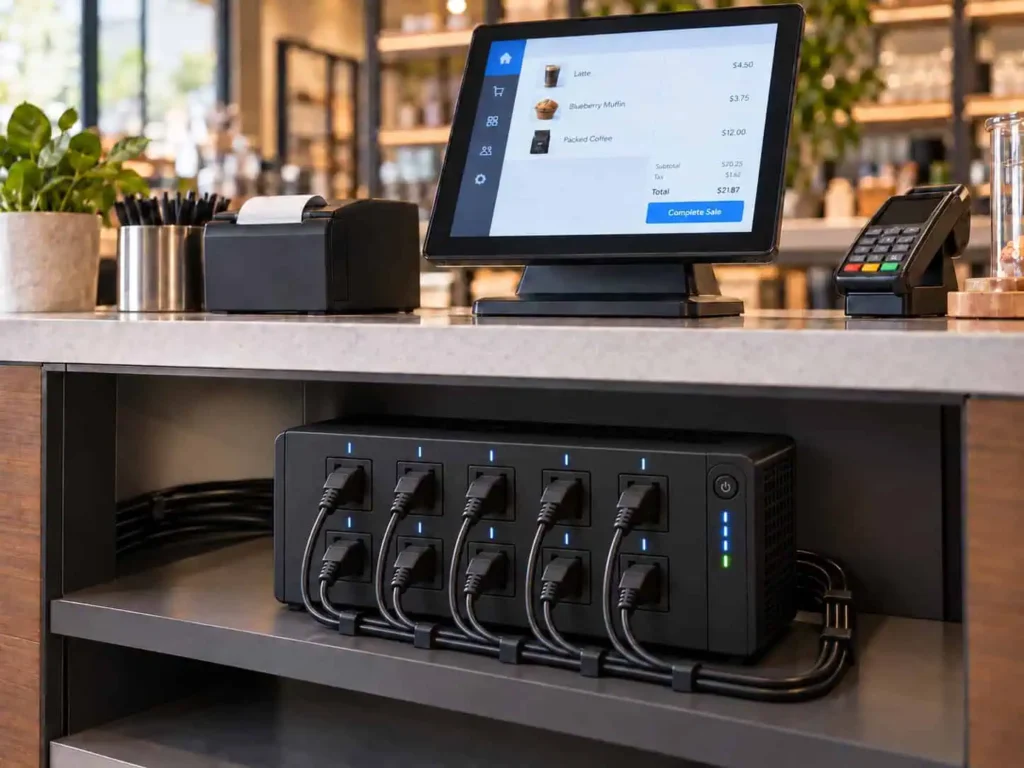
Living in Florida means being familiar with thunder storms and tropical storms. Lights flash. Register starts up again. There is a customer at the register, wondering whether their transaction went through.
It only took one second. It takes much longer getting it to work again.
While an outage may be a nightmare scenario for a small business in Southwest Florida, this is not the only problem you may experience in terms of electrical issues.
Known as “dirty power,” these problems can easily be overlooked until they affect something you need.
What Is Dirty Power?
Dirty power refers to an electrical current that is not as stable and pure as the one required by your equipment. This form of power may be characterized by voltage spikes, voltage dips, and electrical noise.
Consider voltage as the pressure of electricity. Too much or not enough can be a source of trouble.
It Doesn’t Take a Storm
Lightning is one cause, but the trouble can begin within your building. Motors, HVAC systems, and other devices when switched on/off can lead to changes in the power flow into the nearby devices.
The Electrical Safety Foundation describes the impact of surges on electronic equipment used in commercial settings. The surge can either destroy the unit immediately or damage it gradually.
Therefore, power protection is required not only during thunderstorms.
How Power Problems Hurt Small Businesses
Apart from the broken unit, the losses are also associated with work interruption.
Interrupted Sales and Longer Lines
Think about how your rush will go if you are constantly resetting your register. Orders pile up. Employees need to verify what payments went through. Patrons grow tired of waiting.
Your POS system relies on more than just the register screen. Power outages on your router, payment terminal, or local server can disrupt your entire transaction flow.
Lost Work and Equipment Damage
An unexpected power outage can delete unsaved work or interrupt a file transfer. An especially hard surge might damage your device’s power supply, as well as other components.
However, not every frozen screen means you have dirty power. Hardware defects, loose connections, and internet issues can have the same effect. If you experience recurring problems, determine their cause prior to replacing any devices.
Surge Protectors and Battery Backups Do Different Jobs
Both of these solutions can serve your business well, but they address separate issues.
Surge Protectors Help Limit Voltage Spikes
A surge protector will help reduce spikes of excessive voltage from reaching your devices. While power strips are simply additional outlets, some have built-in surge protection.
Look for the label. Having six places to plug your stuff into does not mean that you are protected.
The surge protection guide provided by the Electrical Safety Foundation will explain the significance of protecting the outlet and the electrical panel. The latter requires an electrician’s work.
A surge protector won’t ensure that your register will work in case of a power failure. In addition, a surge protector will not resolve any issues related to low voltage or wiring problems.
Battery Backups Keep Essential Devices Running Briefly
“Battery backup” is another name for an Uninterruptible Power Supply (UPS), which provides your electronics with power from its storage while your primary source of energy is absent. The definition provided by National Institute of Standards and Technology describes UPS as a system that allows devices to continue working for a short period without electricity.
This helps the POS equipment endure a momentary power interruption and/or give you sufficient time to turn things off gracefully.
There are some types that provide correction for voltages that may be too high or too low. When selecting a unit, inquire about its automatic voltage regulation feature or AVR.
How to Reduce Power Problems at Your Business
Protect the Whole Checkout Setup
Make a list of all requirements for making a sale possible using your POS system: POS, payment terminal, modem, router, network switch, and even local server.
Leaving the register running will not make any difference if the router shuts off. Moreover, battery alone cannot fix the problem with internet outage.
Match the Backup to the Equipment
Select a UPS according to the total energy requirement of your devices and the duration of their work. The number of outlets is not important.
Verify which outlets provide the electrical power from the battery. There are some devices that have dedicated outlets which can give protection from any surge but not the power from the battery.
Check Protection Before You Need It
Test backup devices periodically, replace old batteries, and check out any warning lights. Surge protectors can become ineffective with age.
If you experience a reset of any equipment when your AC kicks on, inform your technician. An electrician needs to check the wiring problem. A plug-in device cannot fix these problems.
Keep Power Problems From Interrupting Your Next Sale
There is no need to wait until your terminal is dead in order to check your setup. Planning in advance can help you avoid disruptions.
Contact Card Systems to make sure your business gets the right surge protectors and battery backups for your equipment. Having a local team to assist you will provide your business with the proper protection needed to keep your equipment safe and operating correctly.